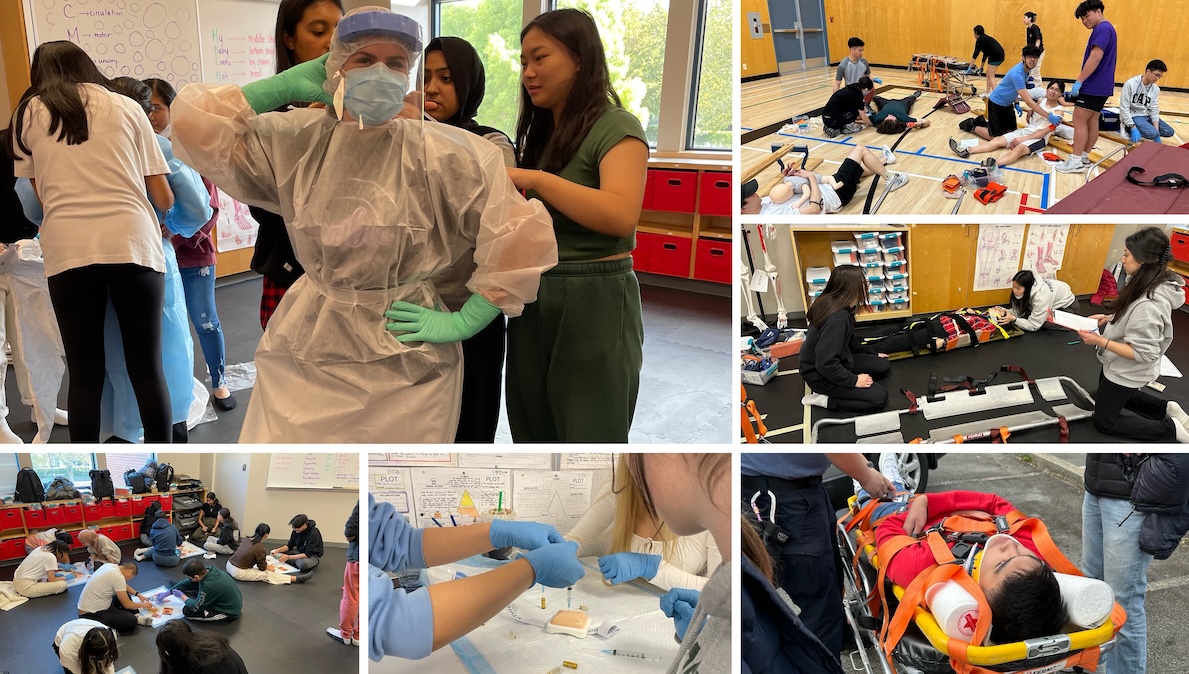
In a Medical Sciences class, triage practice brought a new level of focus to the classroom. Learners rotated through roles as patients and responders, working through realistic scenarios where careful observation and clear communication were essential. One responder assessed injuries while a partner recorded findings, with both collaborating to determine the appropriate medical response.
As the scenarios unfolded, confidence grew. Participants practiced staying calm, communicating clearly and making decisions together, stepping forward to explain medical information in clear and reassuring ways.
The impact of the practice continued beyond the classroom. Many later recognized opportunities to apply their skills at home or in the community, stepping in to help when support was needed. Through triage practice, students came to understand that what they were learning carried real responsibility and purpose.