Equity in Action Project
In 2016, the Ministry of Education created an Equity Scan Framework and vision to support school districts in identifying promising practices as well as barriers that are impacting Indigenous student achievement and success. This was done in response to the Office of the Auditor General’s report (2015) on Aboriginal Education, the United Nations Declaration on the Rights of Indigenous Peoples (2007), and the Truth and Reconciliation Calls to Action (2015). The Richmond School District started our Equity in Action Scan in fall 2020.
The Equity in Action Project is a commitment made by a school district, local Indigenous communities, and the Ministry of Education and Child Care, to work together to improve the success of all Indigenous students. The Richmond School District recognizes the power of a shared responsibility for Indigenous learners, and endeavour to see all our Indigenous learners graduate with dignity, purpose and options. We believe education that honours the histories, worldviews and perspectives of First Peoples is good for all students in our district and is key to a reconciled relationship with First Peoples in Canada.
The steps of the Equity Scan Process have been clearly defined by the Ministry of Education and result in the exploration of four dimensions:
- Student Learning Profile – looks for key indicators of achievement and learning trajectories for Indigenous students.
- Policy and Governance – processes, plans and policies that may have an impact on results for Indigenous learners.
- Pedagogical Core – the experiences of learners in relation to curriculum, the presence of relevant cultural experiences and values placed on Indigenous worldviews and perspectives.
- Learning Environment – includes human and educator bias, and learning spaces.
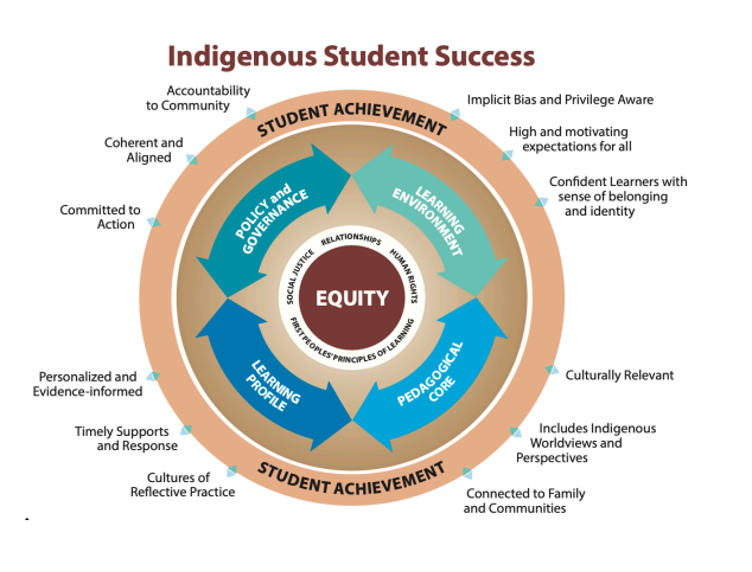
Through the Equity Scan, several recommendations emerged and are the foundation of the work of improving Indigenous student success in the Richmond School District. The full Equity in Action Project Report with recommendations were shared at the January 18, 2023 Public Meeting of the Education Committee.
The Equity in Action Project is now the documented plan of action, which replaces the Aboriginal Education Enhancement Agreement (AEEA) that was in place from February 2017 to June 2022. The overall spirit and articulated goals of the AEEA continue to be foundational and overarching in guiding the work that the Richmond School District does to enhance Indigenous student success in our district.
Since the 2024/25 school year, the Ministry of Education established that all districts in the province will be incorporating the Equity in Action Project into the Framework for Enhancing Student Learning. This change will ensure that Indigenous success is a collective and collaborative responsibility throughout the district.
The Indigenous Education Council
The Indigenous Education Council was formed in 2024/25 and consists entirely of Indigenous Rightsholders. The IEC makes decisions regarding Indigenous student success and support in our district.
The Indigenous Education Advisory Committee
This committee discusses how the Indigenous Success Team is supporting students and their families, as well as actions the district is taking to support Indigenous students and Truth and Reconciliation as a system. Participants review recommendations in the areas of Policy and Governance, Learning Profiles, Learning Environment, and Pedagogical Core, and provide feedback about progress to date.
Indigenous Gathering Spaces
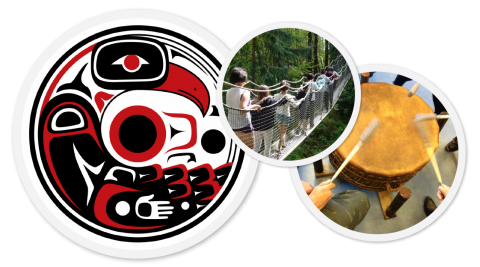
The district now has four Indigenous gathering spaces in two of our elementary schools and two secondary schools. These spaces have been created as safe, welcoming environments where Indigenous students can feel a strong sense of belonging, pride and community.
Designed in collaboration with students and community members, these gathering spaces provide a place for Indigenous success teachers, Elders, knowledge keepers, and program facilitators to come together with students to engage in cultural learning, storytelling, ceremonies and connection. Whether it’s through shared teachings, traditional activities, or quiet reflection, these spaces support the cultural and emotional well-being of Indigenous learners.
Each space is unique and is at a different stage of development. Student voice and leadership have played a key role in shaping the look and feel of these spaces, including the commissioning of original artwork from Coast Salish artists to help Indigenize and honour the land and culture in meaningful ways.
These gathering spaces are becoming important hubs of cultural celebration and learning and are spaces of pride for students, staff and our broader school communities.
Indigenous Learner Success
The Richmond Board of Education acknowledges and thanks the First Peoples of the hən̓q̓əmin̓əm̓ language group on whose traditional and unceded territories we teach, learn and lead.
The Indigenous Success department’s purpose is to build bridges of understanding across the diverse cultures in Richmond by working directly with students with Indigenous ancestry and by supporting classrooms and teachers with Indigenous content. Services vary based on individual needs and are designed with each child’s interests and strengths in mind. Indigenous education in Richmond is guided by the Equity in Action Plan developed by education partners and Rightsholders of the Richmond School District whose focus is to work towards Indigenous student success.
Secondary Indigenous Grad Coach Program
Each secondary school in our district has a secondary Indigenous grad coach (SIGC) — a school-based teacher with dedicated time to support Indigenous students in Grades 8-12. This new role is part of our Equity in Action Plan and responds to data from the Ministry of Education’s How Are We Doing (HAWD) report, which highlights a gap in graduation rates between Indigenous and non-Indigenous students.
SIGCs focus on building relationships, enhancing belonging, supporting academic planning, and helping students stay on track for graduation. They work closely with the secondary itinerant Indigenous success teacher, who leads cultural and community engagement, to provide wrap-around, culturally grounded support for Indigenous learners.
Together, this team helps create stronger pathways for Indigenous student success across our secondary schools.
Indigenous Success For Elementary Learners
At the elementary level, academic success of Indigenous students is supplementally supported by Resource Teachers, and the itinerant Indigenous Success Team. Students receive opportunities for cultural education and experiences from their Indigenous Success Team teacher, on field experiences and guest elders and knowledge keepers.
Indigenous Learner Success Services include but are not limited to:
- Community gatherings and eve ntsto highlight student achievements and bring the Richmond Indigenous community together.
- Field studies and workshops to build connections and enrich cultural understandings.
- Leadership/volunteer opportunities within and outside the school organization.
- Planning for grade-to-grade and elementary to secondary transitions.
- Planning for post-secondary transitions including applications to institutions and scholarship information.
- Additional student advocacy during times of change and/or challenge.
- Curriculum integration through consultation and teacher education that enriches the educational experience for all students.
- Consultation and professional learning opportunities for educators to integrate Indigenous content, knowledge, and perspectives.