Around the district is a monthly update that includes a collection of stories from Richmond schools. These stories highlight Richmond’s vibrant learning community, which fosters student engagement, creativity, and well-being in inclusive learning environments.
Learn About Natural Disasters Through Interactive Projects
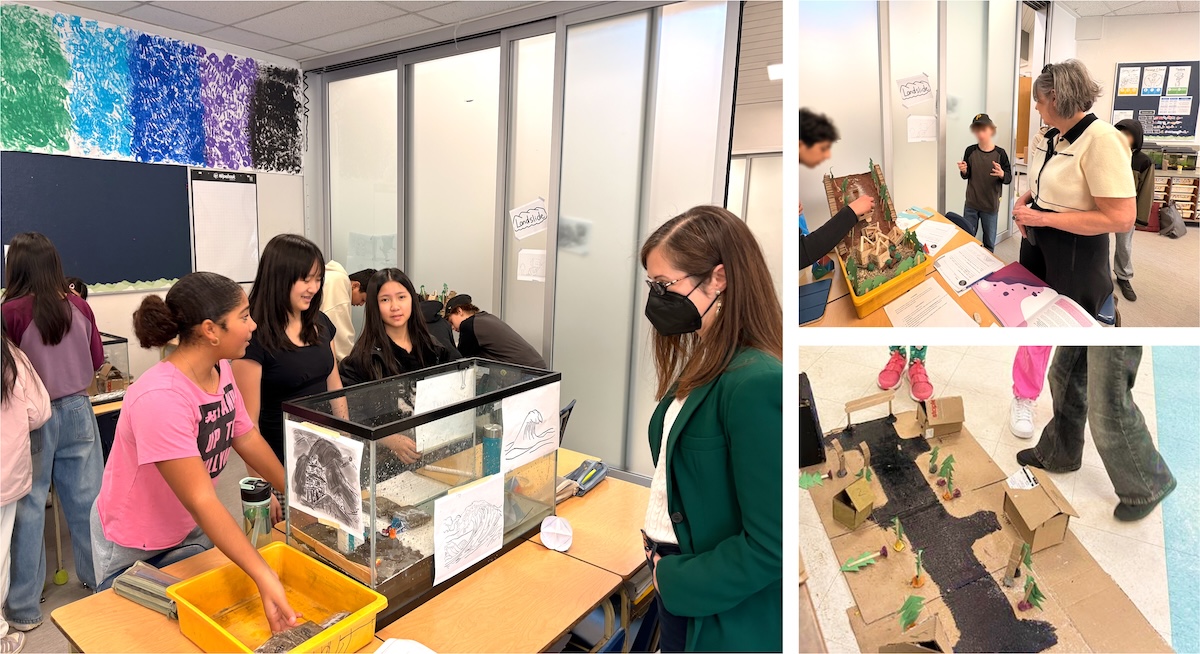
Layers of sand, scattered debris and shifting surfaces helped bring the science of natural disasters to life as students presented interactive models created through the “Master of Disaster” learning unit. Working in groups, they designed tabletop installations that illustrated how events such as earthquakes, tsunamis, floods or powerful storms can transform landscapes and affect people, animals and the environment.
The class had the opportunity to share their projects firsthand with MLA Kelly Greene, Minister of Emergency Management and Climate Readiness, during a classroom visit. As they moved from model to model, the learners explained their ideas, answered questions and demonstrated how their designs represented the impacts of different disasters and how communities can plan and respond.
Through this project-based experience, students strengthened their problem-solving, collaboration and presentation skills while applying their knowledge to real-world emergency preparedness.
Discovering Canada on a Giant Map
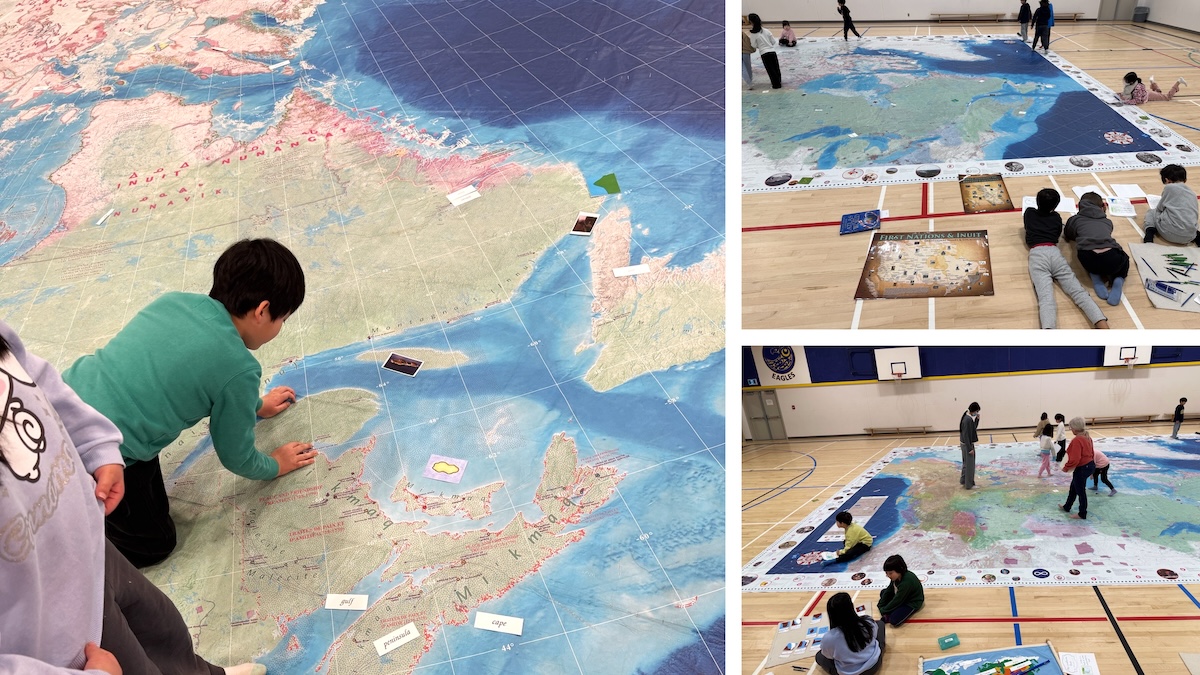
Every morning, students entering the school gym were greeted by a giant map of Canada. Over the course of the week, classes from different grades wandered across cities, rivers and mountains, tracing the lands of Indigenous communities while connecting geography with culture and history in engaging ways.
With resource cards in hand, students eagerly located provinces and cities. Scavenger-style challenges added extra energy, prompting them to solve clues, compare locations, and collaborate as teams, turning the gym into a vivid arena for inquiry and adventure. As they moved across the map, they gained new insights into Canada’s diverse landscapes and regions.
The school-wide activity offered a creative journey through the nation’s geography and Indigenous heritage. Students were captivated by natural landforms, the connections between provinces, and how geography shapes life, leaving them with lasting impressions and a deeper appreciation of Canada’s diversity.
Stepping Into Their Stories: Students Shine in Drama
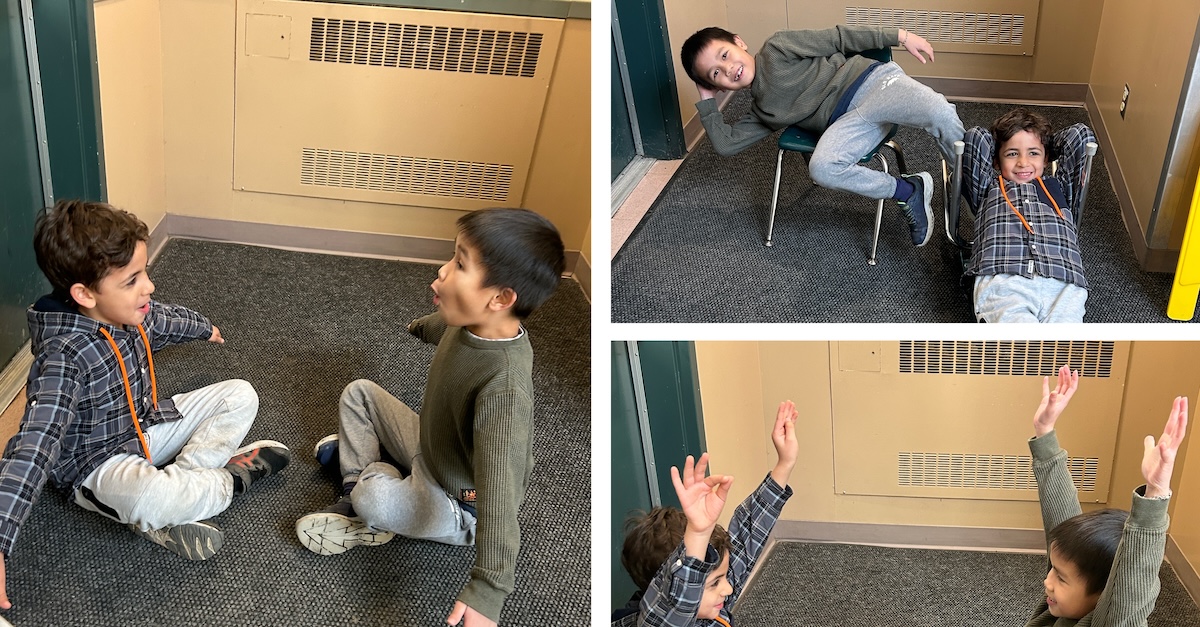
Students explored movement, voice and imagination through the Young Actors Project, guided by visiting drama educators. They acted out scenes, turned chairs into boats or stages, and discovered how everyday objects could spark storytelling. Each activity invited them to try new ideas and immerse themselves fully in the creative challenges of the classroom.
“I liked to learn about body motion, and I liked to say every feeling, like happy, sad, angry, sleepy, brave, surprised and tired,” one reflection noted. Another said, “I enjoyed pretending to be on a beach and acting out emotions.” These reflections showed how learners experimented with characters, emotions and scenarios in a supportive environment.
Through the program, students strengthened communication, focus, problem-solving and self-expression, learned to take creative risks, and enjoyed the fun of creating and performing together.
Transforming Everyday Materials Through Art
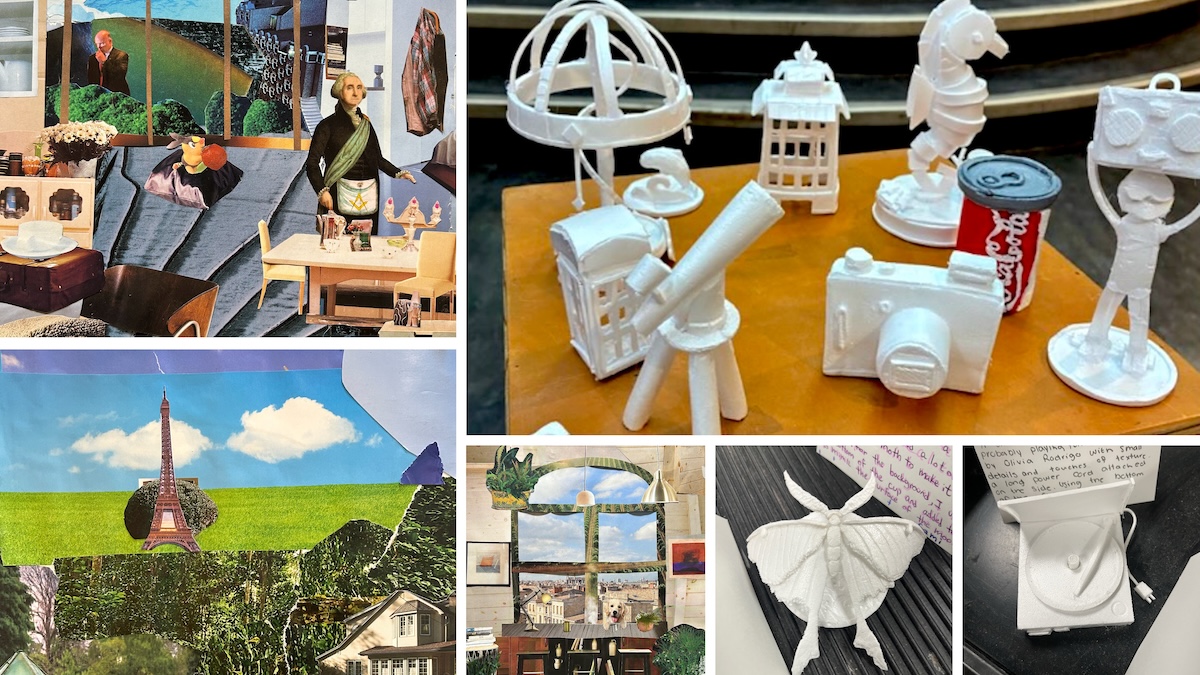
How can everyday materials be reimagined? A school art display offers a glimpse into the possibilities. Styrofoam cups were turned into a lamp, a miniature car and other inventive sculptures, while magazine clippings became lively dreamlike collages. Together, the collection celebrates creativity, imagination and design.
The Styrofoam Cup Challenge invited participants to work with a single cup using only glue and cutting tools. Through experimentation with texture, shape and structure, each creation revealed inventive approaches to design. The works showcased ingenuity and playful problem-solving, encouraging new ways of seeing familiar materials.
Alongside the three-dimensional creations, collages created for the My Dream Third Place project explored imagined spaces. Using magazine images, students worked with depth, layering and perspective while applying key design principles to their compositions. The resulting pieces are energetic, engaging and rich in visual detail.
Young Musicians Shine at District Jazz Night
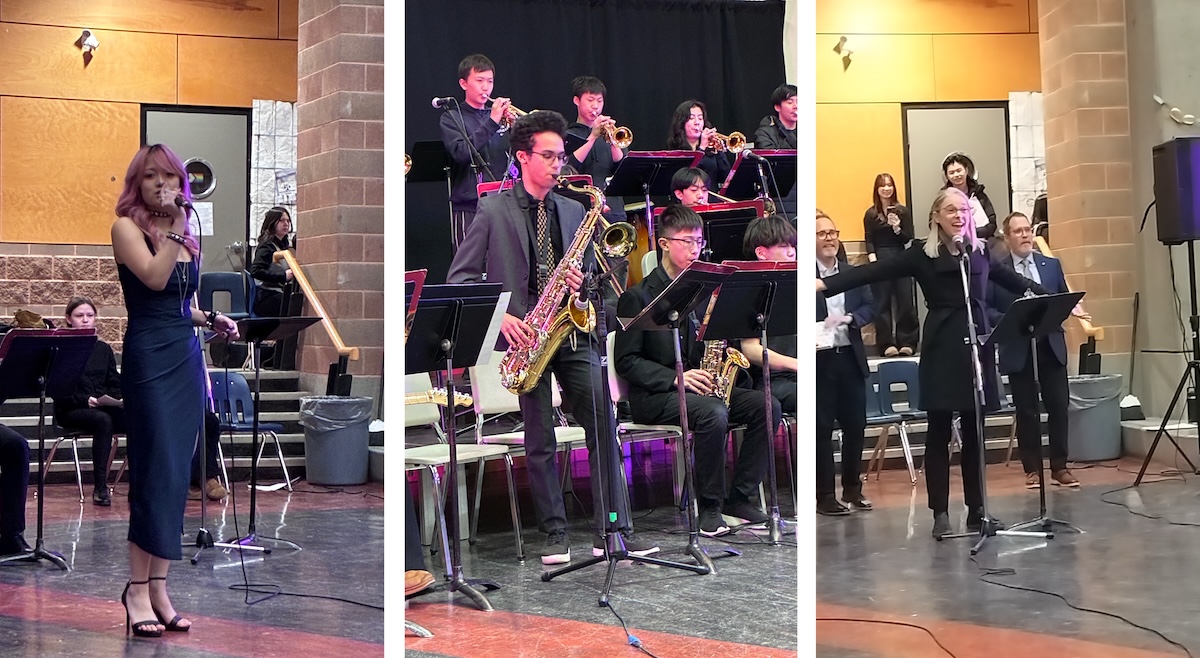
Secondary school jazz bands from across the district came together on March 5 for an evening alive with harmony, swing and the excitement of live performance. Young musicians demonstrated skill, confidence and artistry on stage as they shared the music they had prepared for the Richmond Jazz Festival.
Weeks of focused practice and guidance from jazz adjudicator Jill Townsend, an accomplished composer and educator at Capilano University, supported students’ learning through performances and clinics held during the festival. Families and community members attended the concert, captivated as each essemble brought melody, groove and dynamic interplay to the stage.
The event showcased the impact of music education. Through rehearsal, mentorship and performance, students strengthened their teamwork, sharpened their skills and experienced the joy of creating music together.
Students Immerse Themselves in Canadian Stories
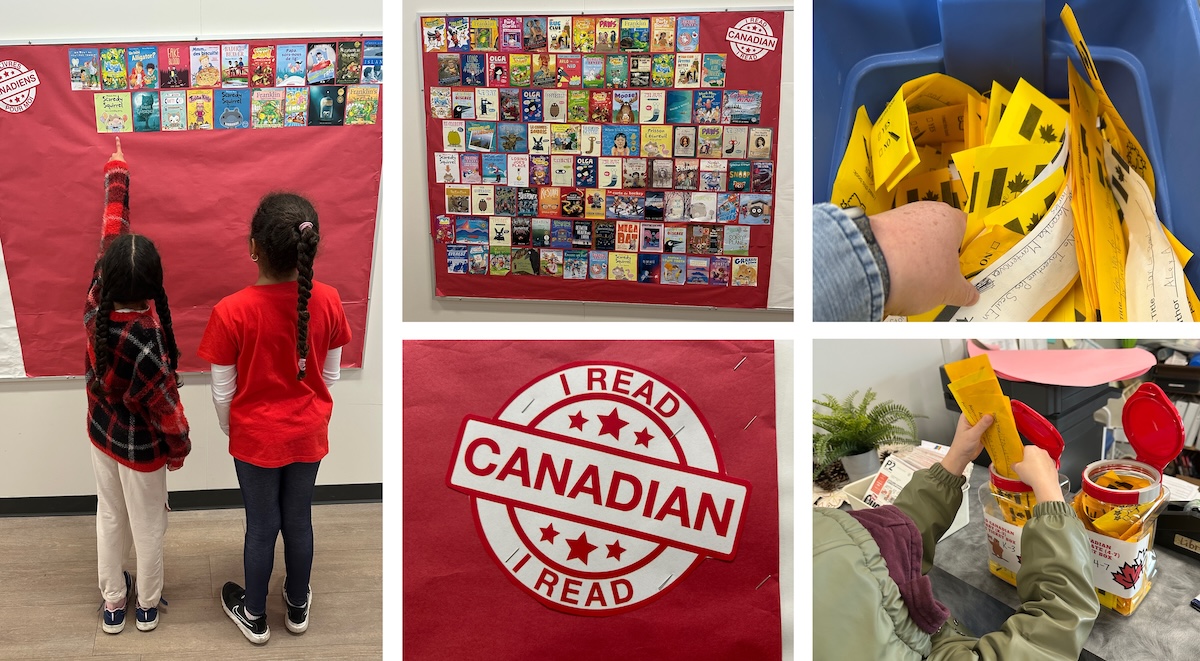
Young readers enthusiastically took part in the “I Read Canadian” reading challenge over five weeks, exploring a wide variety of Canadian books and discovering new favourites. The program encouraged students to explore different genres and share recommendations with peers, sparking conversation and connection around the stories they enjoyed. Each book counted as a single entry, inviting thoughtful reflection and a sense of personal achievement.
With over 100 books completed each week, excitement for reading spread throughout the school. Book covers were added to a display wall week by week, visually capturing the growing progress of the challenge. By the end of the program, the school community had explored a total of 657 books, demonstrating curiosity, persistence and a genuine love of reading.
In April, one of the participants’ favourite authors will visit the school, giving students the opportunity to meet the creator behind the stories and share their reflections. The visit extends the momentum of the challenge and further strengthens students’ connection to Canadian literature.
Secondary Students Explore the Impact of the Olympics
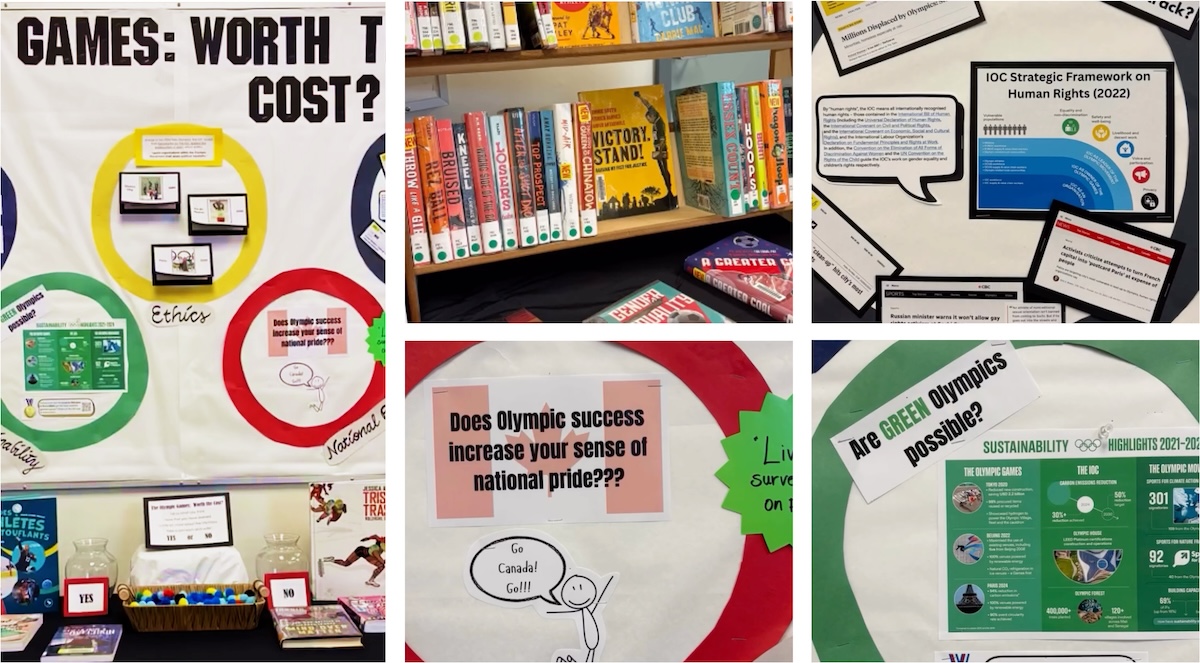
While the Winter Olympics have concluded, the conversations they inspire continue in schools. In March, a secondary school library display invited students to explore what it means to host the Olympic Games and determine whether the benefits outweigh the costs.
The collection of posters presented multiple perspectives, including sustainability, ethics, national pride, economics and human rights. A curated selection of books encouraged classes to read and discuss topics such as “green Olympics,” political neutrality in international sport and the role of athletic success in shaping national identity. Students then shared their views by voting on the central question: Are the Olympic Games worth the cost?
The activity supported the development of critical and reflective thinking while strengthening students’ social awareness. By engaging with diverse viewpoints, participants examined the broader impacts of global events, considered their role in society and the environment and explored how individuals and communities are connected.
Lantern Art Inspired by Storytelling
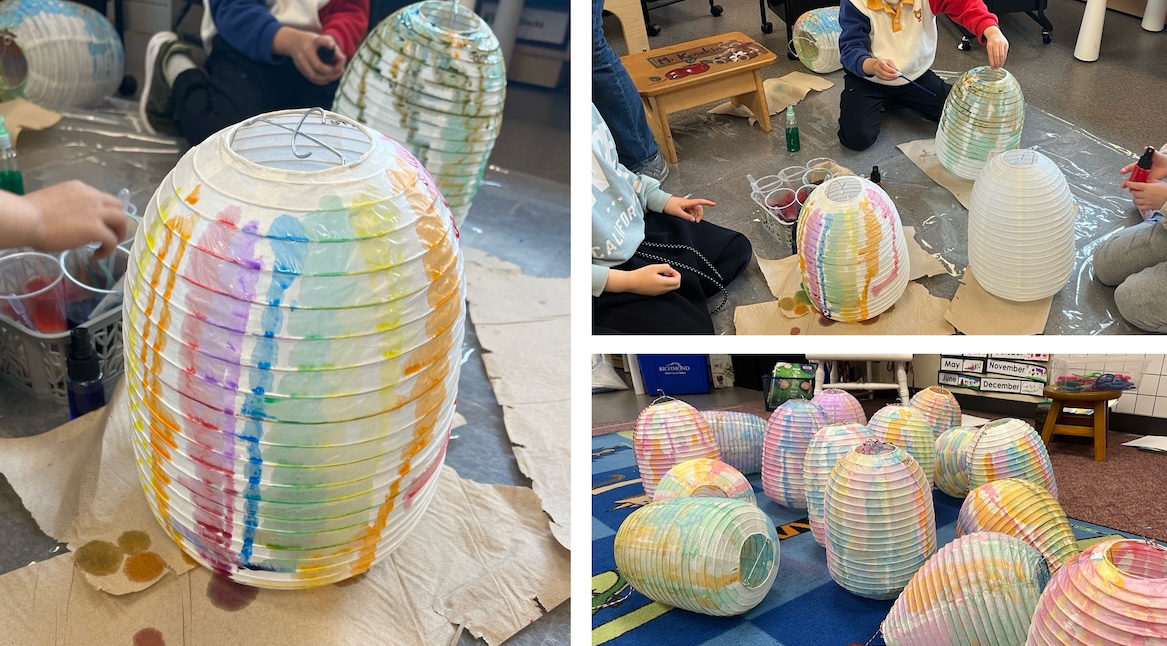
An elementary class explored storytelling and creativity through a lantern‑making project inspired by The Great Race, a traditional tale that explains how the calendar months came to be named after a race between 12 animals. As the story was shared, students were drawn to the lanterns featured in the narrative, sparking curiosity about how to design and make their own lanterns.
The project unfolded over time. Students made their own paint by soaking used markers in water over the course of a week, preparing the colours they would later use on their lanterns. With guidance and support, they used eyedroppers and spray bottles to apply colour, observing how the ink dripped, spread and blended across the lantern surfaces.
As colours layered and overlapped, each lantern took on its own character. The finished pieces became softly layered, one‑of‑a‑kind masterpieces that reflected both cultural learning and artistic exploration.